
Forum Site | Yang Yuheng: Revolutionary Application of New Generation Protective Coatings in Thermal Management
Heat dissipation and protection have always been twin needs. Both active and passive heat dissipation devices face complex environmental challenges in actual operation.
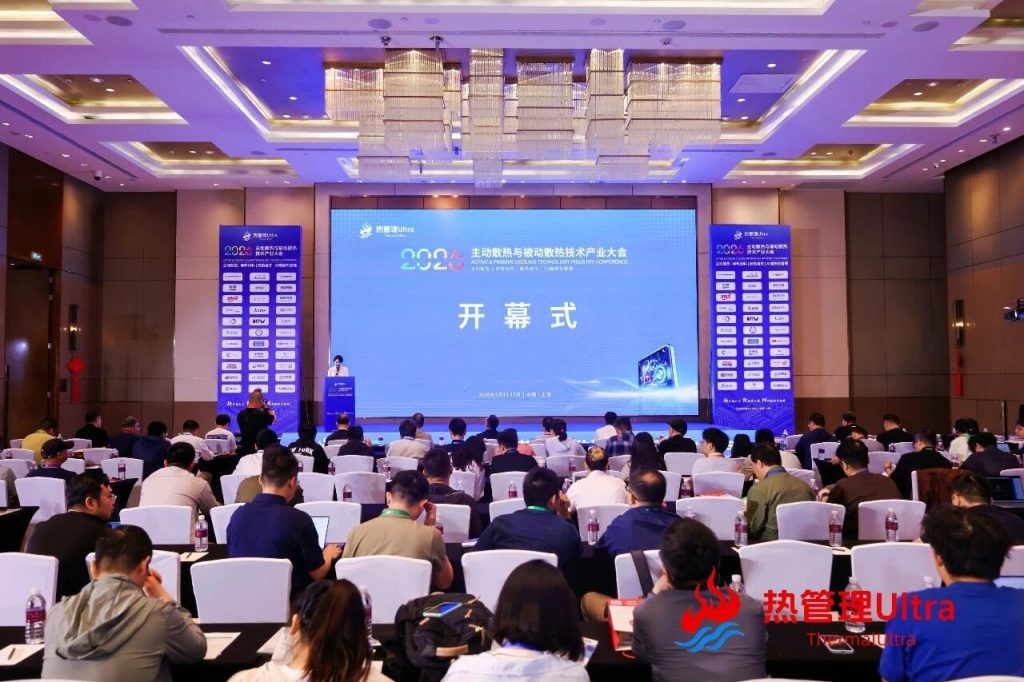
On May 14th, the 2026 Active and Passive Heat Dissipation Technology Industry Conference was successfully held in Shanghai. Many industry experts and scholars focused on cutting-edge fields such as terminal heat dissipation, chip level heat dissipation, and protective coatings, bringing a technology feast that combines depth and foresight. Yang Yuheng, R&D Director of Shanghai Paralon New Materials Co., Ltd., was invited to host a sub forum and share on site the revolutionary application of the new generation of protective coatings in thermal management, discussing with industry experts and scholars how protective coatings can safeguard heat dissipation technology.

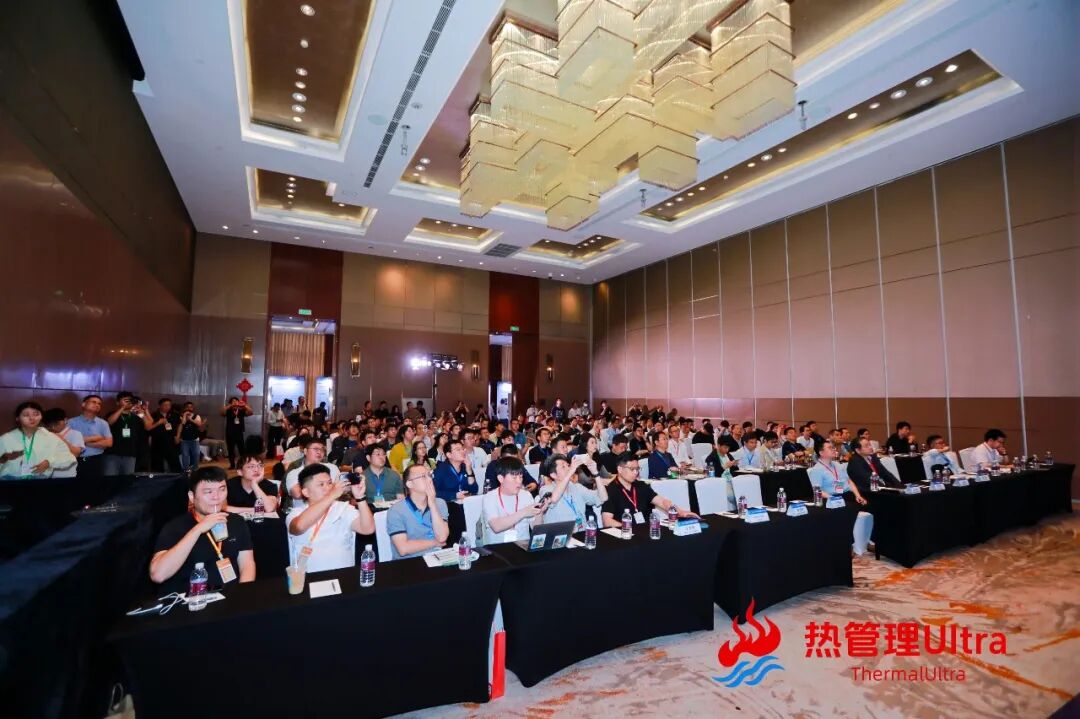
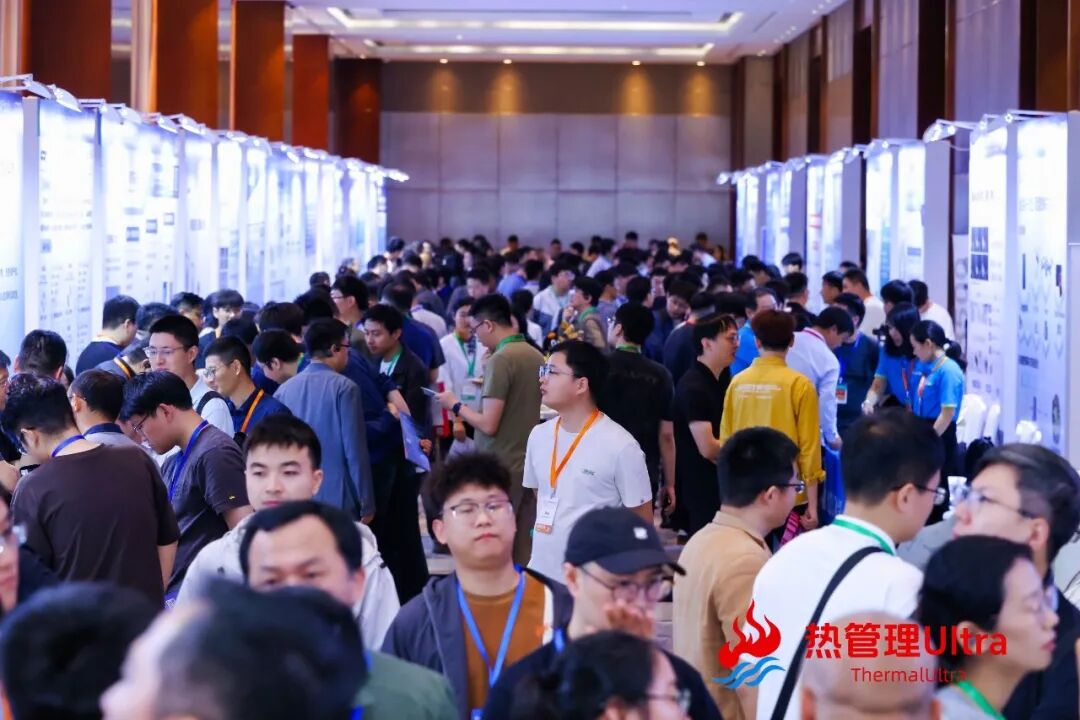
This technology industry conference gathers wisdom from upstream and downstream of the industry chain, providing an efficient communication platform for innovation in heat dissipation technology and industrial implementation, and promoting the industry to jointly explore the future development direction of heat dissipation technology. ZTE Corporation, Transsion Holdings, Nubia, Henkel, Delta Electronics, Ruimeng Semiconductor, Ciyun Resonance xMEMS、 Industry experts such as Xingkai Sheng shared and interacted with guests on site, engaging in lively discussions on technical details, industrialization difficulties, and more.
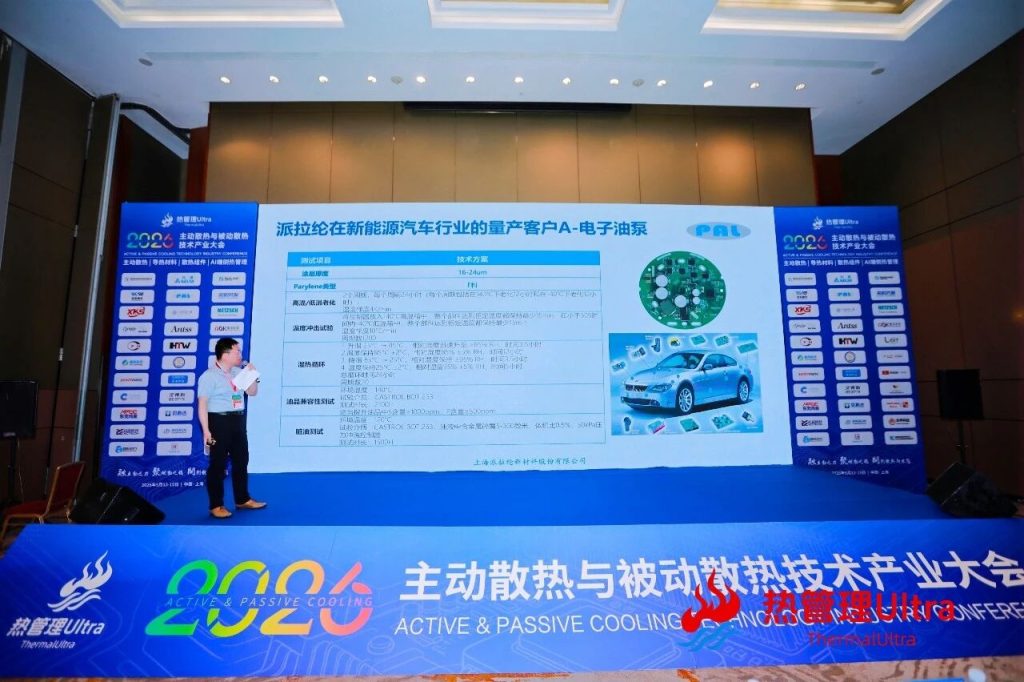
Attachment: Full text of Dr. Yang Yuheng’s sharing
Hello everyone, colleagues! I am Yang Yuheng from Shanghai Paralon New Materials Co., Ltd. It is a great honor to introduce our company’s technological achievements in the field of protective coatings and their innovative applications in the heat dissipation industry at the 2026 Active and Passive Heat Dissipation Technology Industry Conference.
I graduated from East China University of Science and Technology with a major in Applied Chemistry, and later obtained a PhD in Physics from the University of Sack in France. I have been working in the materials industry for nearly 20 years now. In the past 20 years, my research and development footprint has covered multiple fields such as medical devices, 5G communication, rubber tires, semiconductor optical science, AR/VR glasses, adhesives, laptops, mobile phones, and military industry, accumulating rich experience in material research and development. Today, I would like to focus on the heat dissipation industry and discuss with you how protective coatings can safeguard heat dissipation technology.
We, Shanghai Paralon New Materials, are a company specializing in protective coatings. Some people may wonder why a company that produces protective coatings would actively participate in the heat dissipation technology industry conference? Behind this is actually a natural fit between the long-standing pain points in the heat dissipation industry and protective coating technology.
In the electronics industry, heat dissipation and protection have always been twin needs. Both active and passive heat dissipation devices face complex environmental challenges in actual operation. Taking an active radiator as an example, it undergoes frequent alternation of hot and cold during operation, which can easily lead to condensation. And the high-end heat dissipation devices we commonly use, such as VC (homogenization plate), TEC (semiconductor cooler), etc., often use metal materials such as copper, silver, gold, or ceramic materials such as aluminum nitride as their core components. These materials are prone to corrosion, hydrolysis, and other issues in condensation environments: metal materials can undergo electrochemical corrosion due to water vapor in condensation, leading to performance degradation or even damage; Ceramic materials such as aluminum nitride may undergo hydrolysis under the action of water vapor, affecting heat dissipation efficiency.
In addition, commonly used heat dissipation materials such as thermal conductive silicone grease are also prone to hydrolysis failure in water vapor environments. These issues not only shorten the service life of heat dissipation devices, but may also affect the stability and safety of the entire electronic device. And our protective coating technology is the key to solving these pain points
As a professional protective coating enterprise, our products have been applied in multiple scenarios in the heat dissipation industry. For example, on the core components of the cooling fan, our coating can effectively resist the erosion of water vapor and dust, extending the service life of the fan; On the heat dissipation module of high-power chips, our coating ensures both heat dissipation efficiency and reliable protection for the chips.
At present, our company’s core technologies mainly focus on Parylene (chemical vapor deposition CVD), UV three proof paint, ALD atomic layer deposition and other fields. These technologies each have their own advantages and can customize solutions for different heat dissipation scenarios.
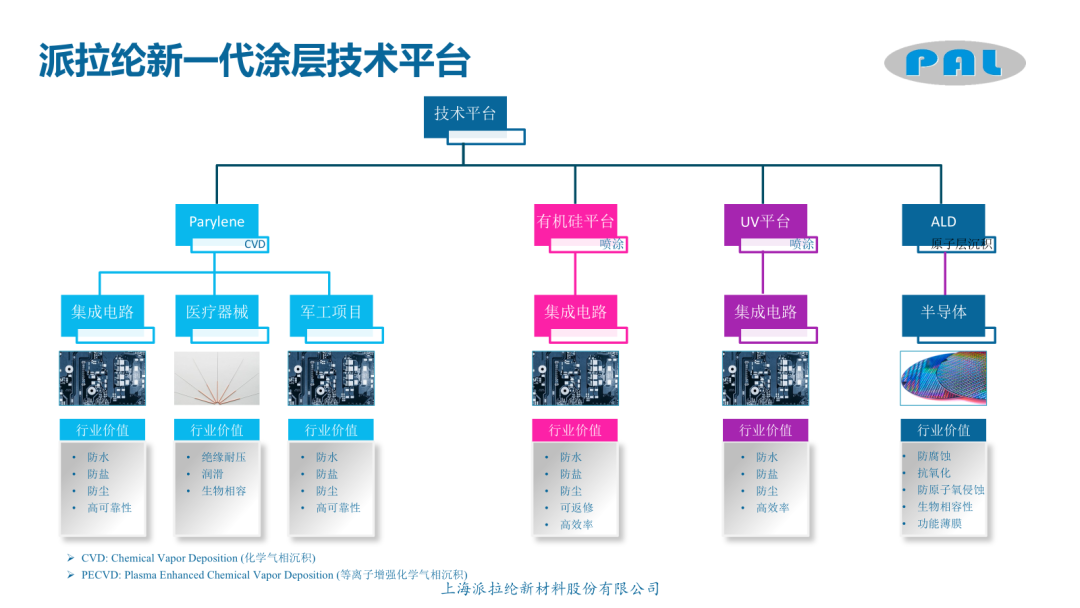
Our Paralon protective coating products have several core characteristics: firstly, excellent insulation and voltage resistance performance. In extreme high temperature environments such as high-speed trains, some components need to maintain stable insulation and voltage resistance in environments ranging from 200 ℃ to 250 ℃ or even 350 ℃. Our coatings can easily meet these requirements and ensure the safe operation of the components in high temperature environments. Secondly, the thickness is controllable and the accuracy is high. In industries such as robotics that have strict requirements for tooling dimensions, our coatings can achieve high-precision processing, strictly control coating thickness, and will not affect the original dimensions and assembly accuracy of the device. Thirdly, it has strong environmental durability. Our coating can operate stably for a long time in the temperature range of -150 ℃ to 350 ℃, with minimal performance degradation, and can adapt to various extreme weather environments. Fourth, low water vapor permeability. For heat dissipation materials such as aluminum nitride that are easily hydrolyzed, our coating can effectively block water vapor penetration, prevent material hydrolysis failure from the root, and ensure the long-term stability of heat dissipation devices. Fifth, 360 ° coverage without dead corners. Through techniques such as chemical vapor deposition, our coating can uniformly cover every corner of the device, including complex gaps and holes, achieving comprehensive protection.
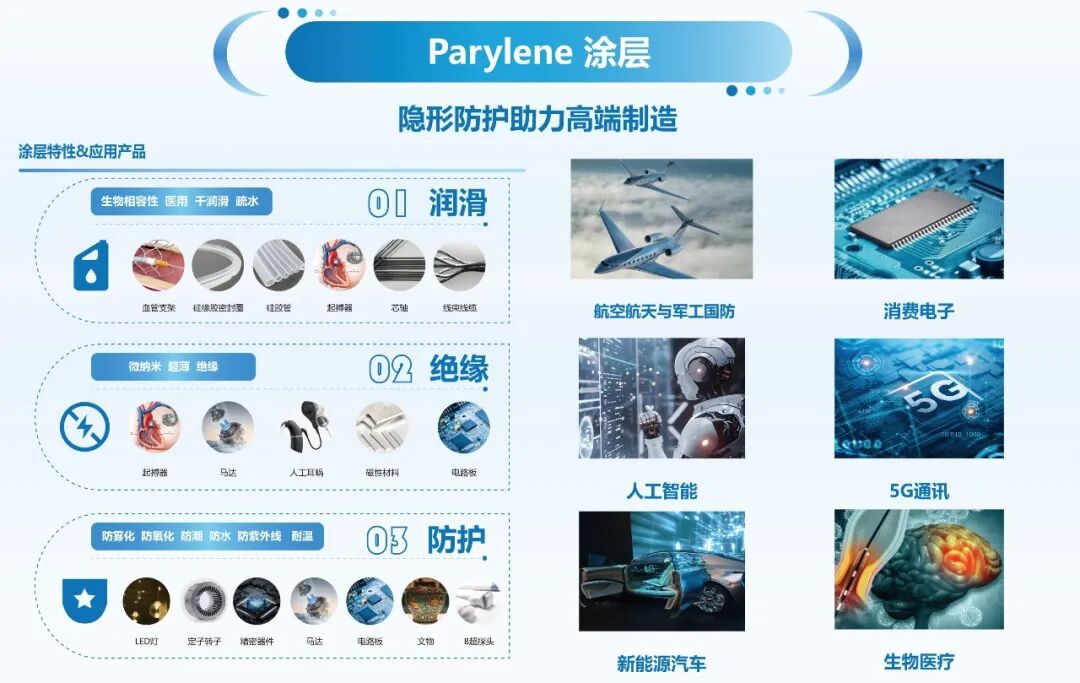
In terms of product layout, we have a rich product line that can meet the diverse needs of different industries. For example, our Parylene coating is widely used in integrated circuits, military, medical equipment and other fields, providing reliable protection for high-precision devices; Our UV polyurethane coating and UV rubber coating perform well in some scenarios that require high flexibility and adhesion; And our ALD atomic layer deposition technology has demonstrated unique advantages in the field of micro nano scale protection.
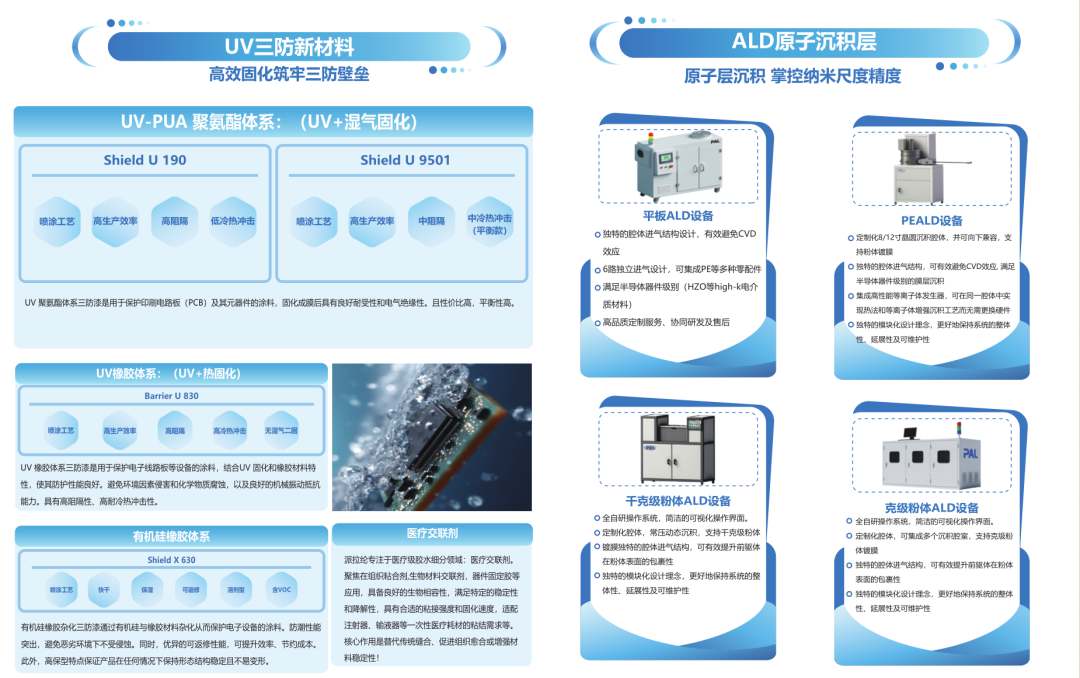
The application of these products in the heat dissipation industry not only solves problems such as corrosion and hydrolysis of heat dissipation components, but also enhances the reliability and service life of the entire heat dissipation system. For example, in the heat dissipation module of the server, our coating can protect the VC heat dissipation plate from condensation corrosion and reduce the failure rate of the server; In the battery cooling system of new energy vehicles, our coating can provide high-temperature and corrosion-resistant protection for the cooling components, ensuring the safe operation of the battery system.
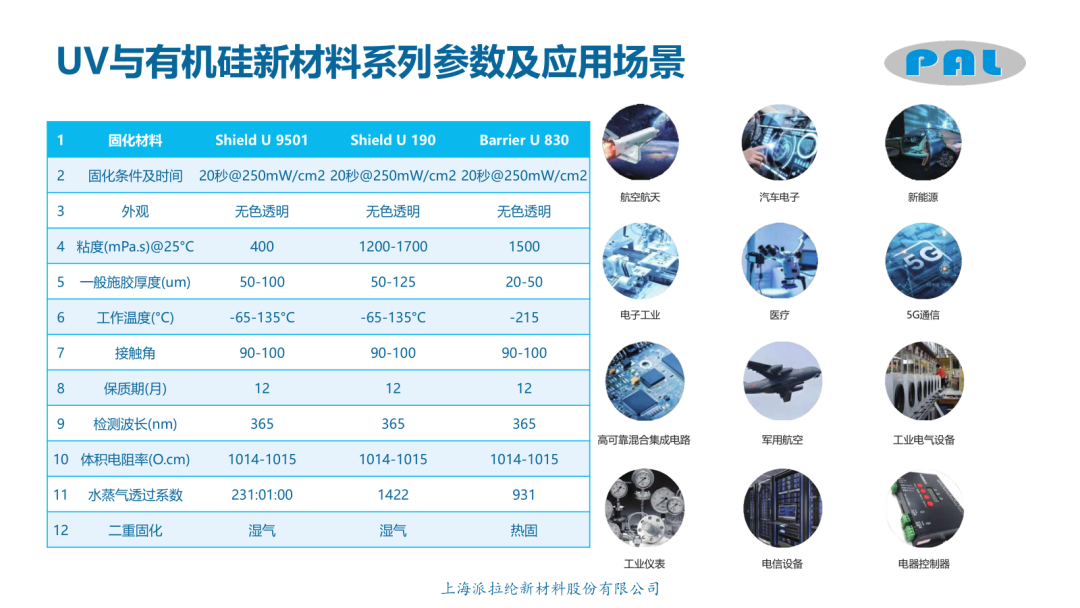
Our atomic layer deposition (ALD) technology belongs to a type of CVD technology, which achieves atomic level thin film deposition on the substrate surface through the alternating reaction of two precursor materials. The biggest advantage of this technology is that it can form nanoscale ultra-thin coatings, and the deposited metal oxides, nitrides, sulfides and other materials themselves have high thermal conductivity, providing protection without affecting the device’s heat dissipation performance. More importantly, ALD technology can be performed in low-temperature environments, typically at deposition temperatures below 85 ℃, without causing thermal damage to thermosensitive devices, which is crucial for many precision electronic components.
We have also innovatively combined CVD and ALD technologies to develop composite coating solutions. For example, for some scenarios with special protection requirements, such as water-cooled cooling systems, a single CVD coating may not fully meet long-term waterproof requirements. However, the composite coating of CVD and ALD can reduce the water vapor transmission rate to an extremely low level – under traditional testing standards, the 24-hour water vapor transmission rate is 90g/㎡, while our composite coating requires continuous testing for three months to detect water vapor penetration, significantly improving its protective performance.
In addition to its applications in the fields of heat dissipation and new energy, our coating technology is constantly expanding into new scenarios. For example, in the field of brain computer interfaces, relying on our technological accumulation in the medical device industry, we have developed biocompatible protective coatings to provide reliable protection for such precision medical equipment.
Finally, I would like to briefly introduce the situation of our company. Shanghai Paralon New Materials Co., Ltd. was established in 2012, formerly known as Shanghai Paralon Biotechnology Co., Ltd. In February 2026, the company completed a name change and raised nearly 100 million yuan in Series B financing. We focus on the application of special coating technologies such as Parylene, and are a high-tech enterprise that integrates materials, equipment, and process solutions. We can provide a full range of coating solutions from research and development to industrial grade.
We have established research and production bases in Shanghai, Hubei, Guangzhou and other places, with a core team composed of senior experts in materials science, chemistry and other fields. We can provide customers with one-stop services from material selection, process validation to mass production.
With the development of electronic devices towards high power, miniaturization, and integration, the challenges faced by heat dissipation technology are increasing, and the requirements for protection are also becoming higher. We, Shanghai Paralon New Materials, hope to have in-depth exchanges with colleagues in the heat dissipation industry through this conference, and jointly explore the integration and innovation of protective coatings and heat dissipation technology. We believe that through the collaborative development of technology, we can create more efficient and reliable heat dissipation solutions for the electronics industry, promoting the progress of the entire industry.
Finally, I would like to thank the conference again for providing us with such a platform for communication, and I look forward to further cooperation with all colleagues in the future. Thank you all!
