Compliant with FDA/ISO dual certification, guarding the "life line" of medical devices!
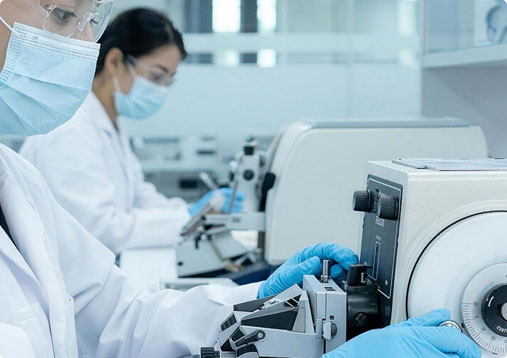
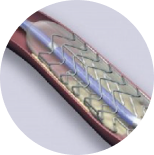
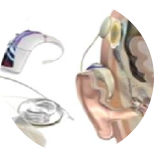
Parylene has become a key material for high-end medical device protection due to its excellent biocompatibility, ultra-thin pinhole free coating, and excellent chemical stability. It is widely used in scenarios with extremely high safety requirements such as implantable devices, catheters, sensors, etc.
Core Advantages
Biocompatibility | ultimate protection | ultra thin and shape preserving | strong electrical insulation | wide temperature resistance range
Typical Applications
Implantable electronic devices, vascular intervention devices, catheters and intubation, medical elastomers
Ultra thin conformal protection: cracking the "coverage blind spot" of microelectronic structures
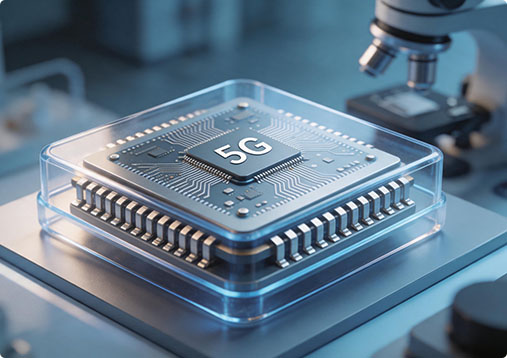
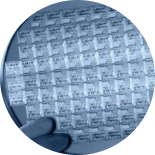
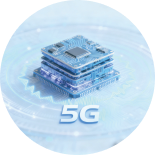
Forming a molecular level uniform thin film with a thickness of only 0.1-100 μ m on the surface of electronic devices, achieving 360 ° coverage without dead corners, completely eliminating blind spots, and providing complete protection for high-density packaged 5G RF modules, MEMS sensors, circuit boards (PCBs), especially flexible circuit boards (FPCs).
Core Advantages
360 ° seamless coverage | extremely low dielectric constant | resistant to oil stains, condensation water, etc. | resistant to extreme temperature changes | solid lubrication
Typical Applications
Millimeter wave radar, 5G antenna modules, MEMS devices, automotive ECU control units, sensors and high-voltage systems, aviation electronics and satellite detectors, wearable devices, medical electronics, etc
Invisible armor, sustainable future - the silent guardian of new energy electronic control systems
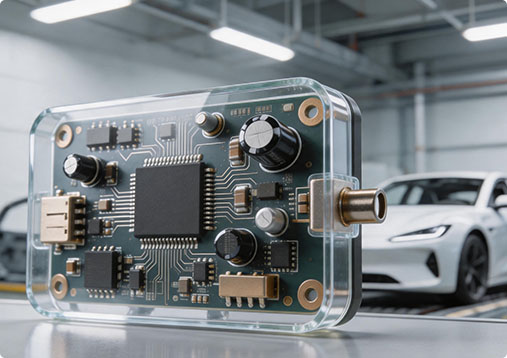
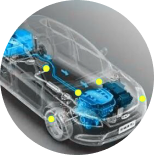
Parylene has been widely applied in high-end new energy electronic systems of leading companies such as Tesla, BYD, CATL, and Huawei digital energy, and its technological path is evolving from "protective coatings" to "functional integration layers".
Core Advantages
99.9%+coverage | dielectric constant as low as 2.3-2.65 | coping with temperature differences and chemical erosion from -40 ℃ to 150 ℃ | stress free deposition and lightweight advantages
Typical Applications
Power battery system, on-board charging system, oil pump system, electric drive system, charging station equipment, fuel cell system, photovoltaic inverter, etc
Extreme environmental tolerance: a 'invisible shield' for dealing with extreme space conditions
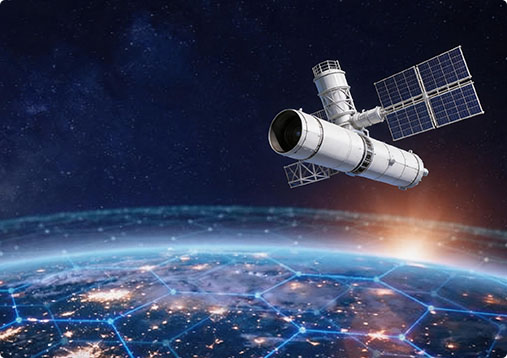
Parylene technology has been successfully applied in major international space projects such as the hubble space telescope, james webb space telescope, and mars probe "perseverance". Parylene has provided aerospace grade Parylene coating services that comply with mil-i-46058c standards for spacecraft in china, widely used in core components such as satellite electronic modules, star sensors, and communication modules. The technical path is synchronized with international standards.
Core Advantages
Wide temperature range stability | vacuum no gas release | anti cosmic radiation | ultra low water vapor permeability | zero weight increment | no impact on functionality
Typical Applications
Satellite platforms, deep space probes, launch vehicles, spacecraft thermal control systems, avionics, space telescopes, etc
The underlying support for neuromorphic computation: constructing a "molecular level insulating layer" resembling brain synapses
Parylene, as a key dielectric layer material for memristors, directly participates in the construction of brain like computing hardware. On a flexible substrate, the Parylene insulation layer can stably control the capture and release of charge carriers, achieving time-dependent plasticity (STDP) and supporting bio inspired learning of pulse neural networks.
Core Advantages
ISO10993 biocompatibility standard | no bridge coverage | signal integrity assurance | compatibility with flexible electronic systems
Typical Applications
Neuromorphic computing memristors and photonic synaptic transistors, AI sensors, edge AI terminals, energy AI fusion silicon-based lithium battery anodes